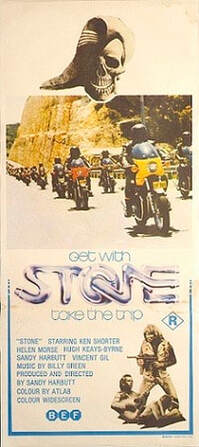
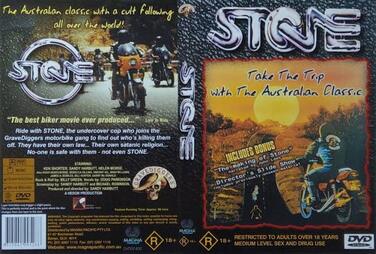
'It has maybe the most authentic, realistic ending of a biker movie in film history' Quentin Tarantino.
Undertaker to Stone... 'Ride at the back of the pack and keep your spanners off our molls'.
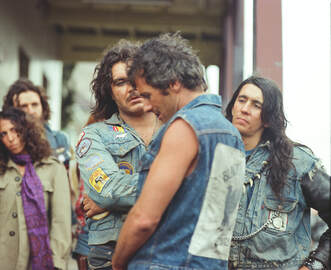
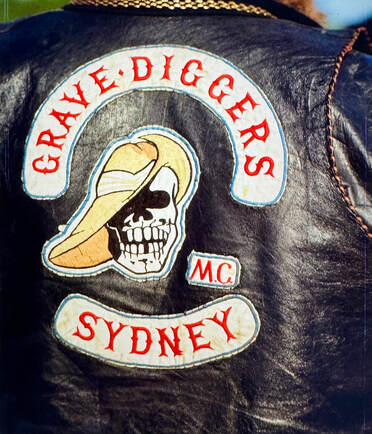
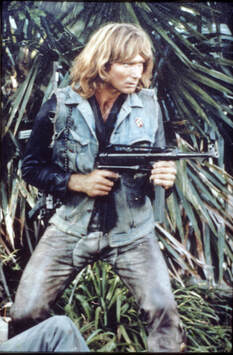
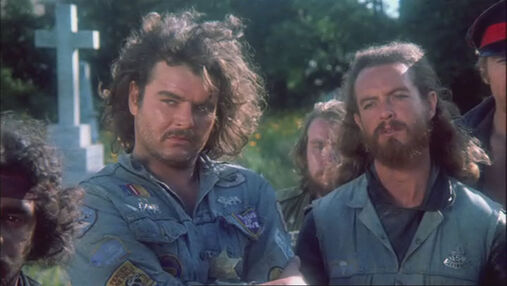
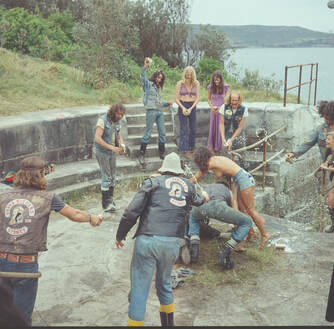
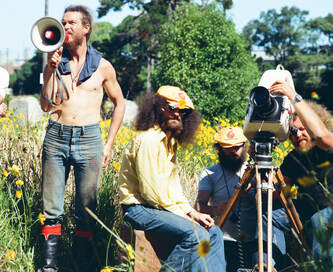
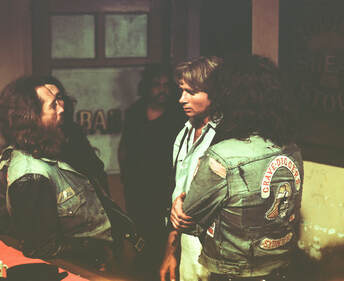
Intertwined between the Black Hawks and Grave Diggers was a mix of actors and real-life bikers and Ol ladies. Stone comes from the wild outlaw days of Australian filmmaking where extras were paid in marijuana and cases of beer and where cast were required to double up to support film crew positions. Stone was made on a restricted budget of $192,000, with many of the cast working in various behind the scene jobs… Sandy ‘Undertaker’ Harbutt, wrote the script, directed, produced, acted and scribed some of the music for the film Stone, Ken 'Stone' Shorter made leather items for the film, Billy '69' Green acted, wrote and sung the music for the film, Vince 'Dr Death' Gill acted and worked as a grip throughout the film, Helen ‘Amanda’ Morse acted and was costume design, Margaret ‘Jay’' Ure acted and was costume design, Vince Tesseriro rode the coffin side car in the funeral scene and was in charge of marketing, Michael 'Pinball' Robinson co-wrote the screenplay and Dave Hart painted all the 16 Z1 Kawasaki 900's and was a supporting artist as a background extra. Note: Actors were given a small clothing budget to improvise in accordance with their interpretation of their character; however, most were required to wear their own items due to budget constraints. All back patches and embellishments on front of the Grave Diggers cut-offs were sown on by hand by Helen Morse and Margaret Ure.
'Our Job was finding out which floor they left their cloths on' Helen Morse.
To the surprise of the contemporary arts society, Sandy Harbutt received some government funding for his film, but in retrospect, it appears the Australian Film Commission (AFC) had no real idea if what type of film Stone was and rather than sell the rights to the film up front to the AFC , Sandy Harbutt and David Hannay opted instead to trim their original budget from $650,000 to $192,000.
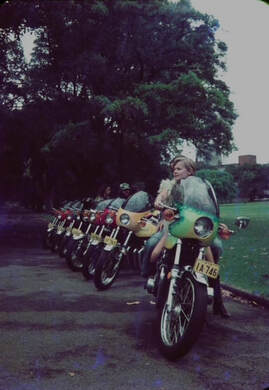
Susan 'Tart' Lloyd riding Hugh 'Toads' Keays-Bryne Z1 Kawasaki 900, 1973. 'Tart was Toads Old Lady'.
It could be stated that the star of the film Stone is the Z1 Kawasaki 900; however, as you watch the fight scene between the Black Hawks and Grave Diggers, the depiction of Australian 1970s motorcycle culture at that time is on display as the Black Hawks ride into town on Kawasaki, Harley Davidson, Ducati and Norton’s. Sandy stated 'I deliberately broke the rules and put Grave Diggers on Kawasaki 900s and it was a serious point of contention at the time. The fact is, that once you rode them, they were just the best bike on the planet, fast, tough and reliable. I guessed that the Grave Diggers back from Vietnam wouldn't care what others would think. During the shooting various people would turn up and debate the choice in bike... but not prepared to try a compare test around the block or any block... no one was prepared to even do a burnout or wheelie competition. All the Grave Diggers were excellent riders; except one'.
Bevan Roberts, the Sales Manager of Kawasaki Motorcycles in 1973 invested $50,000 (the cost of the bikes) into the movie, stating 'after the pictures success, Kawasaki had sold more Z900s per capita, in Australia than any other country in the world.' Note: Sandy was riding a Triumph Trident before it was stolen and Ken Shorter rode a Norton Commando as his daily mode of transport.
Bevan Roberts, the Sales Manager of Kawasaki Motorcycles in 1973 invested $50,000 (the cost of the bikes) into the movie, stating 'after the pictures success, Kawasaki had sold more Z900s per capita, in Australia than any other country in the world.' Note: Sandy was riding a Triumph Trident before it was stolen and Ken Shorter rode a Norton Commando as his daily mode of transport.
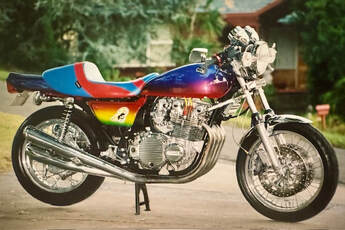
The 'Undertakers' Z1 Kawasaki 900
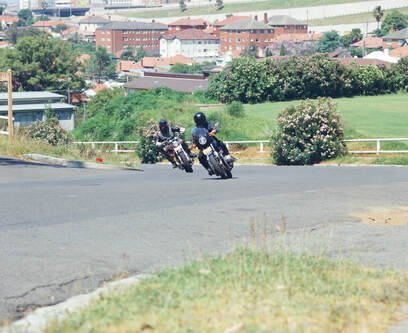
This race scene between 'Captain Midnight' and 'Stone' was done by Brian Martin and Craig Brown. Craig Brown was 'Stone' on the Norton Commando and Brian Martin was 'Captain Midnight' on the Z1 Kawasaki 900. Due to budget constraints, Sandy was hoping that Brian and Craig would perform the race 'free of charge'; however, after an half hour mexican standoff, Sandy agreed to pay them for the race. Brian stated 'It was a joy to do it but you had to deliver what the director wanted' and 'It was a bit of a tight budget operation so the roads weren’t closed off, and we had a few moments with traffic'. A huge camera was set up on the on tank of 'Captain Midnights' bike filming the instruments, with 'Stone' in front of the Z1. Brian recalled that 'one of the streets was a one-way road with an S bend and as I came into the bend pretty hot a taxi was reversing through it... that was a close call I didn't want to repeat'. As 'Captain Midnight' was an Aboriginal character who didn’t wear gloves, the production team were constantly retouching the dye on Brians hands after sweat would wash it off, before any close ups of the handlebar and controls of the Z1.
Hamish Cameron did the stunt work where 'Stone' crashes his Commando at the end of the race.
Hamish Cameron did the stunt work where 'Stone' crashes his Commando at the end of the race.
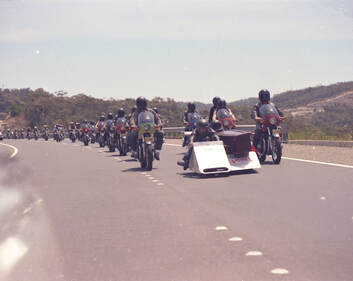
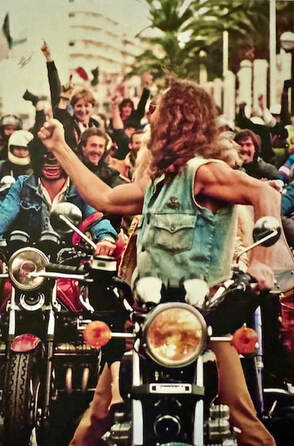
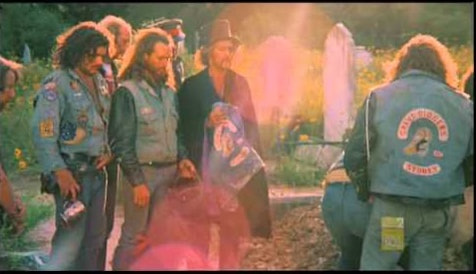
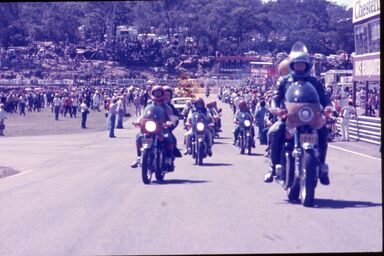
Leading the funeral run were the Grave Diggers followed by the Dominant MC who supported filming throughout the production. Note: Sandy refused to permit the females to ride pillion during this scene, making recommendation that all females would be transported by bus to Gore Hill Cemetery, St Leonards, to avoid any complications that might arise with other MC's attending the run. Margaret 'Jay' Ure stated 'The females were dark that they were not permitted to be in the opening scene riding up the freeway'.
Ride Order: Vince Tesorero with 'Go Down' in the casket, 'Undertaker', 'Toad', 'Hooks' & 'Dr Death' as pillion, 'Dewey', Septic', 'Pinball', 'Captain Midnight', 'Bad Max', 'Zonk'.
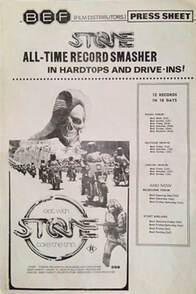
In early 1993 Sandy was approached by the representatives of several motorcycle clubs who requested permission to re-stage a major scene from Stone in celebration of the twentieth anniversary of the films production. The scene, the funeral procession of over four hundred motorcyclists on the Newcastle Expressway, was shot in December 1973 and it was agreed to re-enact the procession in December 1993. A party site with facilities and entertainment was arranged near Newcastle and all motorcyclists were invited to attend through the motorcycle press. As they had twenty years before, NSW police agreed to co-ordinate traffic for the ride from Lane Cove to Newcastle. Twelve thousand motorcyclists were estimated by police and the motorcycle press to have participated in the 'Stone Run' on Saturday 11 December 1993, the largest ever gathering of motorcycles in Australia. The success of the Stone Run in 1993, led negotiations for a re-release of the movie Stone at the Greater Union complex in George Street, Sydney in January and February 1994 and a booking for the Melbourne Fringe Festival in October 1994. Stone was also sold to SBS TV for three screenings and in its first, in October 1994, it was SBS highest rating picture of the year.
The critical response was the complete revers to that of twenty years before:
Adrian Martim wrote in The Age 'Sandy Harbutt's film has carved out an indelible space for itself in Australian popular culture... the film also provides a fascinating and entertaining road map to the Australian cinema that followed it - perhaps not the offical history enshrined in books, but maybe a more important and vital one' and Peter Castaldi wrote in the Sunday Herald Sun 'deserves its cult status on the pantheon of 0Z Films... sits on the list of the most successful Australian films ever made'.
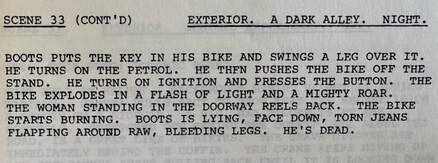
'Boots' gets blown up by a bomb, 'Go Down' is decapitated, a Grave Digger 'Peter Armstrong' rides over a cliff, 'Dr Death' and 'Toad' die of shotgun wounds.
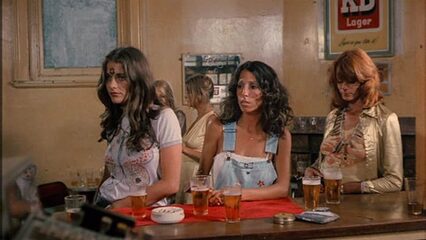
Jane Gilling 'Eurydyce' with Victoria Anoux 'Flossie' and Jude Mathews 'Blue'.
'Euridyce was Dr Death Ol Lady' and 'Blue' was Septics Ol Lady'. Note: During the scene before the cross and bow is fired into the pinball machine, seven takes were required and Karyn 'Sunk' Love made sure temple hash was available for cast during takes… 'after seven takes we were feeling quite relaxed'.
In Stone, Rebecca Gilling played a bikie moll, frolicking on the beach nude and smoking pot... 'there was a bit of hallucinating going on as well, probably'; however, we weren't stoned all the time, there was a degree of discipline about what we were doing... there was a sense of you didn't get stoned until after'.
In
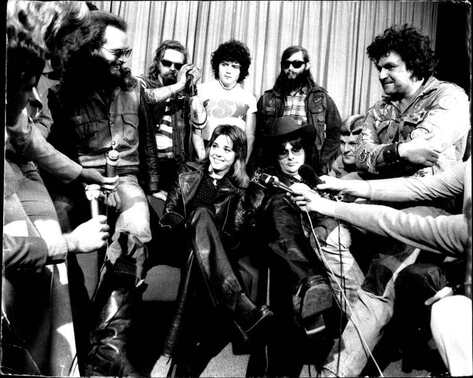
The females in Stone were a collection of a couple of camps… models or actors who were represented by Hedon Productions and those without any acting credentials that were part of the 'biker life and culture'. Margaret ‘Jay’ Ure lived up the street from Sandy 'Undertaker' Harbutt and knew Dewey 'Septic' Hungerford. During the development of the script Margaret asked Sandy ’am I in it', Sandy stated 'of course you are Margi’. Margaret stated that ‘It never felt like a job as most of us were friends… we lived it’.
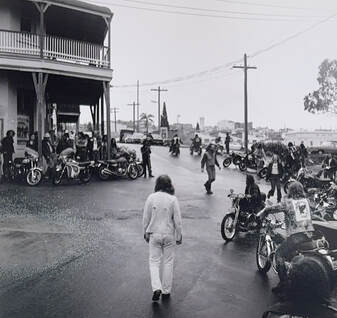
Tension was placed on the actresses playing the bikie molls. Sandy stated 'it took a lot of courage for those girls to handle the circumstances they were put in. They knew what they were getting into. I told them it was going to be dangerous. For a start, you'll be riding around on the back of motorcycles which is innately dangerous and we will be dealing with some dangerous people, some of the girls said that's terrific'. The dangerous people were some of the members of the local motorcycle clubs at the time.... 'they turned up at the studio a couple of weeks before we started shooting. I still don't know how they found out what was going on, but they came to the desk and said we would like to meet the bloke that's making this movie, there was four of them, we had a talk and got along pretty well'.
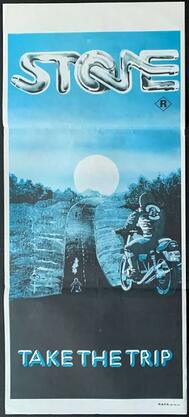
This is the last scene in the movie and was filmed in 1973, East of Cobar at Nyngan, NSW. The Grave Diggers stopped overnight at the Royal Hotel in Dubbo, meeting an Outlaw Club for drinks and watching the movie 'Zulu' at the Dubbo Drive In. That evening Sandy departed the Drive In early, to enable an early rise for location scouting. Sandy states' the highway runs behind the Drive-In, so as I headed back to the pub, I lined up the Kawasaki and pulled a wheelie for the troops... Ferret thought this was a good idea, so rode out and did the same; however, the constabulary had observed me leaving and waited for Ferret. They busted him and he only stayed out of the cooler because he convinced them he was a movie star and not a bikie'.
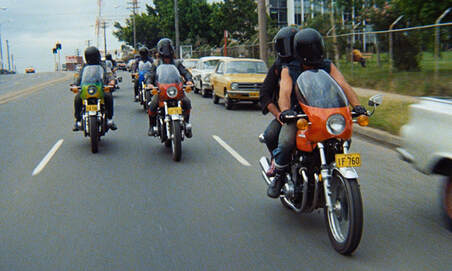
The Kawazaki 900s arrived at Dave Harts workshop in original condition, removing the pillion rails and fitting flat bars and bikini fairings. Dave Hart personalised the paintwork on each of the 16 Z1 Kawasaki 900s to represent its rider and made recommendation that 'only the women have open face and painted helmets'. The Grave Digger helmets are black to help disguise the rider from the audience to permit interchangeability of rider for stunt work. All the cast members were offered to purchase the bikes at half price; however, since most of the cast had their own bikes, only Sandy, Tim and Mike took up the offer. The 'Undertakers' bike went to Tim Storrier, '69s' bike went to Sandy and Mike Robinson took 'Buzzards' bike, with the rest of the bikes being returned to Kawasaki for auction.
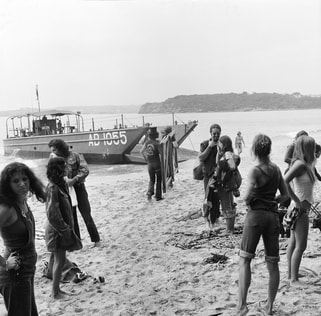
The Army supported Stone during the morning beach scene by supplying a landing craft, boat crew and safety swimmers. Bikes were parked at Balmoral Beach, with cast and crew transported pre-dawn to Washaway Beach. The Army also provided access to the fort at Middle Head with generators to film inside the fort.